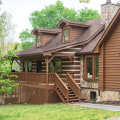
A dry-weather walk around a log home can miss the route rainwater takes across its exterior. After ordinary rain, a careful look from safe ground can provide useful information for a maintenance visit. The purpose is to record where water goes, not to diagnose hidden decay or begin repairs.
Watch the water route
The National Park Service’s Preservation Brief 26 on historic log buildings identifies repeated wetting from runoff and splashback as a concern at areas such as sills, corner notches and projecting log ends. It emphasizes addressing moisture sources, including roof drainage and conditions around the foundation. Although written for historic buildings, this provides useful context for questions to raise with a log-home specialist.
From a stable location, note water spilling over a gutter, dripping repeatedly onto a log end or splashing onto low wall sections. Stay away from damaged areas and do not climb onto a roof or ladder to follow the water.
Make the photographs easy to locate
Take a wider view showing the side of the building, followed by a closer photograph of the visible concern. Label the date and location, such as “north corner below gutter joint.” Record whether the image was taken during rain or afterward.
When conditions are dry, photograph the same view again if it is safe. A paired record can help explain an intermittent problem without claiming that a dark mark proves decay.
Bring the observations to a specialist
Ask a qualified log-home contractor to assess the water source and the condition of the affected materials. Share any history of gutter work, coating changes or landscaping near that location. Do not fill cracks or apply a new finish simply to hide an unexplained wet area.
Our guide to damaged-log replacement provides broader repair context. Whether repair or replacement is appropriate requires assessment of the actual building, including the cause of deterioration.
Check the result of the agreed work
Keep the contractor’s findings and completed work description with the original photographs. Ask what follow-up observation is useful after the next rain and whether any further inspection is needed. For a historic property, coordinate proposed alterations with the relevant preservation professionals. A clear sequence of observations and repairs is more valuable than an unlabeled collection of close-up photographs.